
Hi everybody,
And here’s to a new week!
So I want to talk about the title of today’s note. I didn’t come up with this gem. I came across it while searching for more cute cat videos on IG:
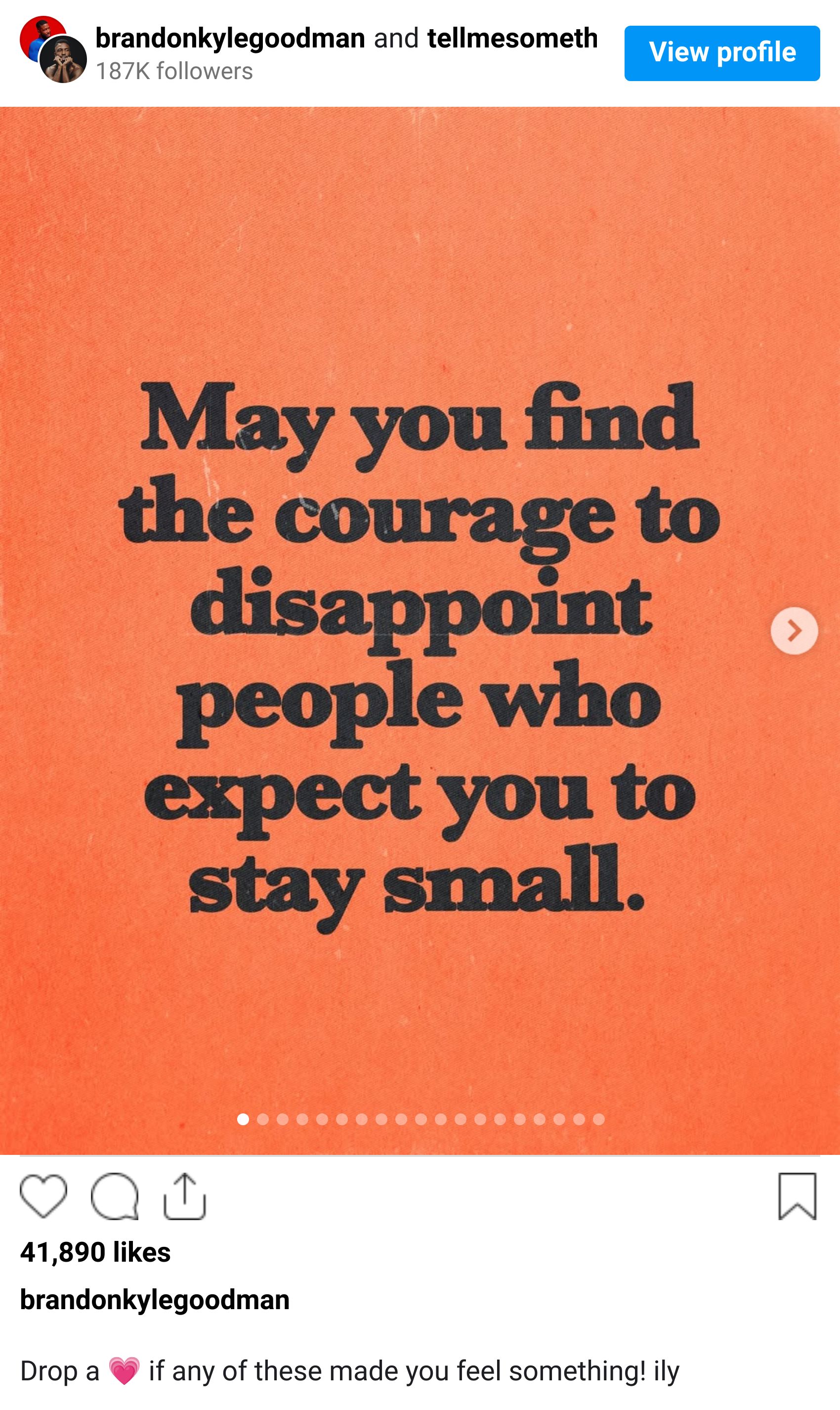
(Shout out to Michell C. Clark, who is widely attributed with the original version, which replaced uses of the first person “I” in the quote.)
As soon as I stopped staring at the post, I hit that 'save' button, knowing I was going to share it with you. This speaks to the battle I see in the creative leaders, editorial leaders, and founders who come to me.
They have powerful—I mean like moving -- and fly -- missions, a wealth of experience, and a vision that changes minds and lives, but they’re stuck on HOW they’re telling the story about what they’re doing.
When they talk about what they do, the power of their work is crystal clear. Their stories are powerful. But when they’re asked directly to talk about what they do, they can’t quite connect their expertise - the internal stuff that they’ve earned with the story of their work.
They start self-editing.
They search for the right words.
They start sounding like an expert rather than sharing the story of their expertise.
As they search for a story to tell, they confuse ‘specific’ with ‘small,’ because they want to be understood by everyone — ANYONE. So, they lean into the language of their old job, their bosses, or what society has conditioned them to use - to be understood.
And I get it, at a time where everybody is making a pivot, people are trying to land the plane they're building. They know what they want to say in their heads - but don’t know how to tell others in a way they can stand by, because, well, there’s a lot going on.
I get it. That was me, too.
I’m a master communicator, especially on the mic and on the page, but when I resigned from Spotify to build my business helping people use podcasting and newsletters to tell their stories, I became tongue-tied.
So what did I do? I relied on the job titles and the accolades—everything that was on the outside—to help shape my story.
I didn’t value the internal processes and experiences. My ability to ask seemingly simple questions that generated powerful answers, and identify meaningful stories that could bridge people and inspire new conversations. I let the language of past jobs - and those expectations keep my vision small. That created my narrative gap - I stopped understanding what it was I wanted to say.

Gif by UniversalMusicIndia on Giphy
Things are different now, of course, because I ask myself the same questions I ask the creators and leaders I work with.
And I guess the moral of my story is this: You don’t win by playing small. Your message becomes soft and, quite frankly, risks meaning nothing. To anyone.
Which means your audience — who needs you to show up, fully — loses out, too.
I know doing this isn’t easy; it requires you to answer BIG questions about what you want to say, and how it relates to your mission, whether that’s for your business or your reporting.
I’m helping people answer those big questions in a safe space through the inaugural cohort of my hybrid program, Close Your Narrative Gap, starting on March 16. It's the intentionally sized space designed to help you:
Define Your Narrative and move beyond the old titles.
Find Your Power by owning your journey.
Create Authentically with a voice that is finally all your own.
You’ve done the hard work. Now, let’s make sure you’re ready to disappoint all the right people by being as big and brilliant as you were always meant to be.
Enroll in the inaugural cohort of Close Your Narrative Gap, starting March 16.
“Close Your Narrative Gap” is an intentionally sized three-week hybrid program where I’ll guide you to find your narrative direction, identify topics to create content around, and create your narrative blueprint, so you can talk to the world about what you do with the clarity, consistency, and confidence you’ve been looking for.
The program starts on March 16. For $99 (limited time early bird pricing), you’ll get six prompts to work on in your time, and support through three 60-minute small group calls on the following days:
March 16
March 20
April 6.
All calls take place at 10am PT / 1PM ET.
If you can’t make the meetings, don’t worry — each session will be recorded. You’ll have access to the recordings until April 20, 2026.
See you there.
Christabel